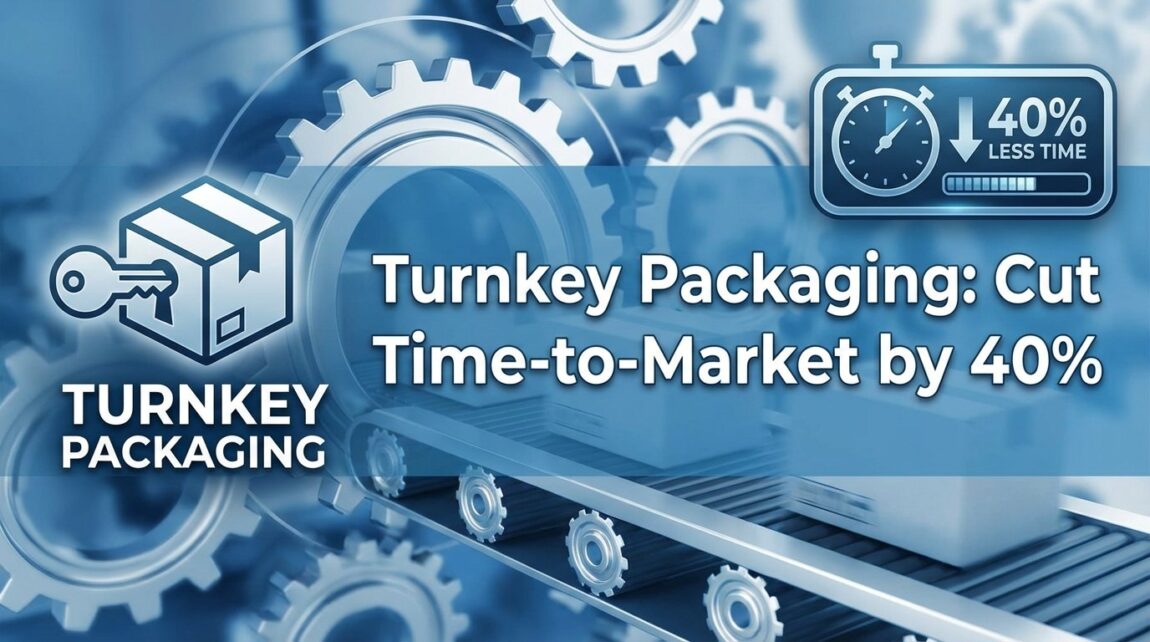
Product delays cost companies more than just revenue—they result in missed market opportunities, increased carrying costs, and competitive disadvantage. For brands in the pharmaceutical, cosmetics, and personal care industries, the traditional approach of coordinating multiple vendors for formulation, packaging design, component sourcing, filling, and distribution creates complexity that extends timelines by months. Research consistently shows that brands utilizing turnkey packaging solutions reach retail shelves 35-40% faster than those managing fragmented supplier networks.
The difference lies in eliminating the coordination overhead, redundant quality checks, and communication gaps that plague multi-vendor operations. When one partner manages your entire packaging process from concept through final delivery, the streamlined workflow translates directly into accelerated launch schedules and reduced operational friction.
Understanding Complete Packaging Solutions
Turnkey packaging solutions represent a comprehensive approach where a single contract manufacturer handles every aspect of bringing your product to market. Rather than sourcing containers from one supplier, closures from another, filling services from a third party, and labeling from yet another vendor, end to end packaging services consolidate these functions under one roof.
This integrated model encompasses product development consultation, custom container design, regulatory compliance documentation, cleanroom manufacturing, quality assurance testing, primary and secondary packaging, serialization, kitting, and fulfillment services. The coordinated workflow eliminates handoff delays and creates accountability through a single point of contact managing your project from initial concept through warehouse delivery.
The Hidden Costs of Fragmented Supply Chains
Managing multiple packaging vendors creates substantial hidden expenses beyond the obvious coordination time. Each supplier transition introduces quality control checkpoints, shipping delays, inventory holding costs, and potential damage risks. When components arrive from different sources, dimensional tolerances may not align perfectly, creating assembly complications during filling operations.
Documentation requirements multiply exponentially with each additional vendor. Certificate of analysis paperwork, lot traceability records, chain of custody documentation, and compliance certifications must be collected, verified, and compiled from every supplier. For FDA-regulated products requiring complete batch records, assembling documentation from five different vendors can consume weeks of administrative effort.
How Turnkey Contract Packaging Accelerates Timelines
The 40% time reduction achieved through turnkey manufacturing services stems from parallel processing capabilities and elimination of inter-vendor delays. Traditional sequential workflows where design completion triggers container ordering, which then enables filling operations, which finally allows labeling, extend timelines unnecessarily.
One stop packaging solutions enable concurrent activities. While finalizing label designs, the manufacturing team prepares filling equipment and orders components with established lead times. Quality assurance protocols are validated once rather than repeated at each supplier transition. Material compatibility testing between formulations and packaging happens early, preventing costly redesigns discovered late in development.
Streamlined Regulatory Compliance
For pharmaceutical and OTC products, FDA registration and GMP compliance documentation represent significant timeline factors. Turnkey partners with established quality systems, current registration status, and documented validation protocols eliminate months from the compliance process. Rather than qualifying multiple facilities and validating supply chain controls across numerous vendors, brands inherit the established compliance infrastructure of their contract manufacturer.
ISO 8 cleanroom certifications, annual FDA inspections, and ongoing quality management systems require substantial investment and expertise. Established turnkey providers maintain these certifications continuously, allowing brands to launch products in compliant facilities without building internal capabilities or waiting for new vendors to achieve certification.
Critical Components of End-to-End Services
Comprehensive turnkey packaging solutions deliver the greatest time savings when they encompass these essential capabilities:
Design and Development Support
Early collaboration between brand teams and packaging engineers prevents costly revisions. Turnkey partners provide technical guidance on container selection, closure compatibility, material interactions with formulations, and design for manufacturability principles. This consultation identifies potential issues before committing to tooling or large component orders.
Custom container design services include 3D modeling, prototype development, and compatibility testing. For unit-dose applications like single-use ampoules, sachets, or towelettes, specialized equipment requirements and filling processes require early planning integrated with package design decisions.
Component Sourcing and Inventory Management
Complete packaging solutions include established supplier relationships for bottles, jars, tubes, pumps, closures, labels, and secondary packaging materials. These relationships provide preferential lead times, quality consistency, and supply chain reliability that individual brands struggle to achieve with smaller order volumes.
Vendor-managed inventory programs maintained by turnkey partners ensure component availability aligned with production schedules. Rather than brands ordering packaging materials months in advance and managing warehouse storage, the contract manufacturer coordinates just-in-time delivery matched to filling operations.
Integrated Manufacturing Operations
The core value proposition centers on seamless production workflows within a single facility. Modern turnkey operations feature multiple filling lines handling different formats—liquids, creams, powders, gels—with quick changeover capabilities. Cleanroom environments meeting pharmaceutical standards protect product integrity for sensitive formulations.
In-house capabilities for primary packaging, labeling, cartoning, shrink wrapping, and case packing eliminate transportation between facilities. Products flow continuously from bulk filling through finished good status without leaving the controlled manufacturing environment. This containment reduces contamination risks while compressing timelines.
Quality Assurance and Testing
Turnkey manufacturers implement comprehensive quality systems covering incoming material inspection, in-process controls, and finished product testing. Stability testing chambers, microbiology labs, and analytical testing equipment validate product performance and regulatory compliance without outsourcing to third-party laboratories.
Integrated quality management systems track materials from receipt through final shipment with complete batch genealogy. When issues arise, traceability and corrective action occur within one organization rather than requiring coordination across multiple vendors with potentially conflicting data.
Real-World Time Savings: A Comparative Analysis
Consider a cosmetic brand launching a new skincare line with five SKUs. The traditional multi-vendor approach typically follows this timeline:
- Component sourcing and ordering: 12-16 weeks
- Component delivery and inspection: 2-3 weeks
- Coordination and scheduling with filling operation: 2-4 weeks
- Bulk filling and primary packaging: 1-2 weeks
- Transportation to labeling facility: 1 week
- Label printing and application: 2-3 weeks
- Secondary packaging and case packing: 1-2 weeks
- Quality documentation compilation: 2-3 weeks
Total timeline: 23-36 weeks from final design approval to warehouse-ready inventory.
The same project managed through complete turnkey packaging solutions operates on this compressed schedule:
- Concurrent component ordering and production setup: 10-12 weeks
- Integrated filling, labeling, and secondary packaging: 2-3 weeks
- Quality release with consolidated documentation: 1 week
Total timeline: 13-16 weeks, representing a 43% time reduction and enabling market entry before competitors using traditional approaches.
Scalability and Flexibility Advantages
One stop packaging solutions provide scalability that fragmented vendor networks struggle to match. As product demand grows, turnkey partners adjust production schedules, increase line time allocation, and scale component orders without requiring brands to renegotiate multiple contracts or coordinate capacity across different suppliers.
Seasonal demand fluctuations, promotional volume spikes, and new product introductions integrate smoothly into established manufacturing relationships. Rather than each vendor optimizing their individual operations, the turnkey manufacturer balances resources across all project phases to meet brand requirements.
Reduced Minimum Order Quantities
Small and emerging brands particularly benefit from turnkey arrangements that offer lower effective minimums. While container suppliers might require 10,000-unit orders and filling operations demand 5,000-unit batches, integrated operations can economically produce smaller quantities by eliminating inter-vendor shipping costs and optimizing equipment utilization across multiple brands.
Financial Impact Beyond Speed
While accelerated time-to-market delivers obvious revenue advantages, turnkey manufacturing services provide additional financial benefits. Reduced working capital requirements result from eliminating the need to purchase and warehouse components months before filling. Inventory carrying costs decrease substantially when materials arrive just-in-time for production.
Transportation expenses drop when products don’t ship between multiple facilities. Insurance costs, damage risks, and freight delays disappear from internal supply chains. Administrative overhead decreases when managing one vendor relationship rather than coordinating five or six separate suppliers, each with unique terms, contacts, and systems.
Selecting the Right Turnkey Partner
Not all contract manufacturers offering “turnkey services” deliver genuine end-to-end capabilities. Evaluate potential partners on these critical factors:
- Facility certifications: Current FDA registration, GMP compliance, and ISO cleanroom ratings appropriate for your product category
- Equipment capabilities: Multiple filling technologies, various packaging formats, and flexible line configurations
- Quality infrastructure: In-house testing laboratories, documented validation protocols, and established quality management systems
- Supply chain relationships: Direct component sourcing, vendor-managed inventory programs, and backup supplier networks
- Experience depth: Proven track record with products similar to yours, regulatory submission support, and long-term stability in the industry
- Scalability capacity: Ability to grow production volumes as your brand expands without requiring facility transitions
Frequently Asked Questions
What industries benefit most from turnkey packaging solutions?
Pharmaceutical, cosmetics, personal care, OTC medications, nutraceuticals, and wellness products see the greatest advantages. These categories require regulatory compliance, quality assurance rigor, and frequently involve multiple SKUs where coordination complexity multiplies quickly. Brands in competitive markets where time-to-market directly impacts success particularly benefit from accelerated timelines.
Do turnkey services cost more than managing multiple vendors?
While per-unit packaging costs may appear slightly higher, total program costs typically decrease by 15-25% when accounting for reduced administrative overhead, eliminated inter-vendor shipping, lower inventory carrying costs, decreased quality issue frequency, and faster market entry generating earlier revenue. The consolidated billing and simplified accounting also reduce internal processing costs.
Can brands maintain packaging flexibility with turnkey arrangements?
Yes, reputable turnkey partners support packaging changes, seasonal variations, and limited editions within the established relationship. The integrated operations actually enable greater flexibility since design modifications, component substitutions, and process adjustments happen within one organization rather than requiring renegotiation across multiple vendors. Many turnkey providers specialize in managing diverse product portfolios with frequent variations.
Strategic Advantages for Brand Growth
Beyond immediate project timelines, complete turnkey packaging solutions position brands strategically for long-term growth. The manufacturing partner relationship becomes a competitive asset, enabling rapid response to market opportunities, quick product line extensions, and efficient geographic expansion. Companies can focus internal resources on brand building, marketing, and product innovation rather than operational manufacturing management.
For emerging brands, turnkey partnerships provide access to sophisticated manufacturing capabilities without capital investment in facilities or equipment. Established brands benefit from flexible capacity that expands and contracts with market demand without fixed overhead commitments.
The 40% time-to-market reduction represents just the beginning of value creation. When packaging operations align seamlessly with brand objectives through experienced turnkey partners, the foundation exists for sustainable competitive advantage in increasingly crowded markets where speed, quality, and reliability determine success.
LF of America has delivered complete turnkey packaging solutions for over 35 years, helping brands across pharmaceutical, cosmetics, and personal care industries accelerate market entry while maintaining rigorous quality standards. Our ISO 8 cleanroom facilities, comprehensive quality systems, and integrated manufacturing capabilities transform packaging complexity into streamlined execution. Contact our team to discuss how end-to-end services can reduce your time-to-market while enhancing product quality and regulatory compliance.