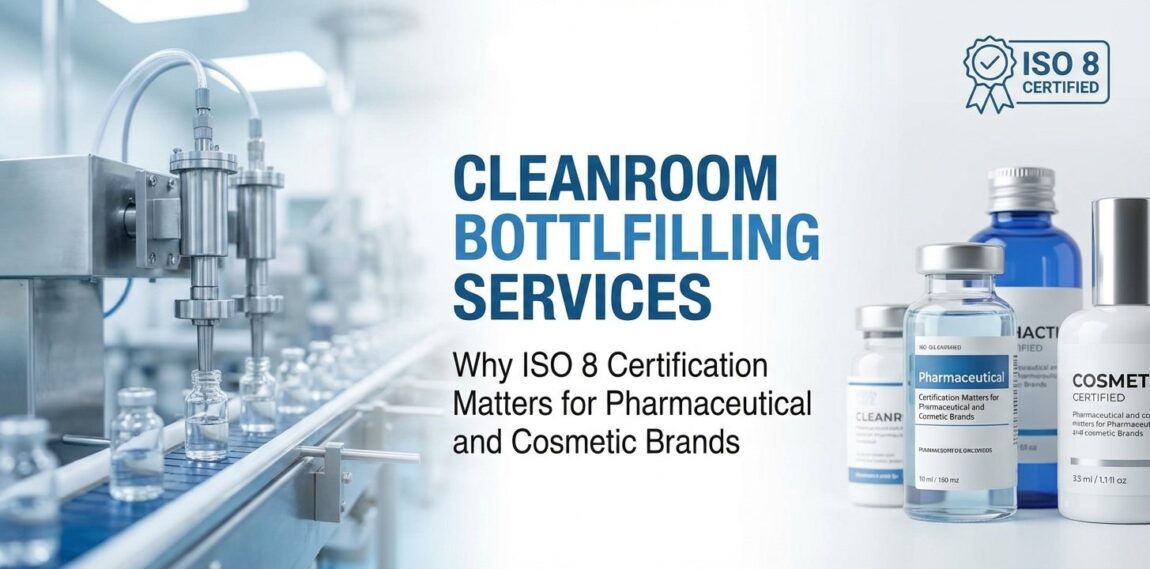
When product contamination leads to a recall, the financial impact extends far beyond replacement costs. Damaged brand reputation, regulatory scrutiny, and lost consumer trust can take years to rebuild. For pharmaceutical and cosmetic brands, the bottle filling environment represents a critical control point where even microscopic contaminants can compromise product integrity. This is precisely why ISO 8 certified cleanroom bottle filling has become a non-negotiable standard for quality-focused brands.
Understanding ISO 8 Cleanroom Classification
ISO 8 classification, defined by ISO 14644-1 standards, specifies the maximum allowable particulate matter in a controlled environment. In an ISO 8 cleanroom, air quality is maintained to contain no more than 3,520,000 particles (0.5 microns or larger) per cubic meter. While this might sound technical, the practical implication is straightforward: ISO 8 environments provide a controlled atmosphere that dramatically reduces contamination risks during bottle filling operations.
The classification system works on a numerical scale where lower numbers indicate cleaner environments. ISO 8 represents the appropriate balance for most pharmaceutical bottle filling and cosmetic bottle filling applications, providing robust protection without the excessive costs associated with higher classifications like ISO 5 or ISO 6, which are typically reserved for sterile injectable manufacturing.
The Science Behind Particulate Control
Particulate contamination poses distinct threats depending on product category. In pharmaceuticals, foreign particles can trigger adverse reactions, reduce efficacy, or indicate broader sterility failures. For cosmetics and personal care products, contamination affects texture, stability, color consistency, and shelf life. Even products not requiring sterile bottle filling benefit substantially from cleanroom environments that minimize bacterial loads, fungal spores, and environmental debris.
ISO 8 certified facilities employ multiple contamination control mechanisms including HEPA filtration systems, positive air pressure differentials, controlled temperature and humidity, gowning protocols for personnel, and rigorous surface sanitation procedures. These integrated systems create a validated environment where contract bottle filling services can consistently deliver products that meet or exceed quality specifications.
Regulatory Compliance and Market Access
FDA regulations under 21 CFR Part 211 (Current Good Manufacturing Practices) mandate that pharmaceutical manufacturers maintain appropriate environmental controls during production. While the FDA doesn’t explicitly require ISO certification, the agency expects manufacturers to demonstrate equivalent contamination control, making ISO 8 certification a practical pathway to regulatory compliance.
For over-the-counter (OTC) drug products, which occupy the regulatory space between pharmaceuticals and cosmetics, cleanroom bottle filling provides essential quality assurance. Products like eye drops, nasal sprays, topical treatments, and oral rinses all benefit from controlled filling environments that reduce microbial contamination risks.
The FDA’s increasing scrutiny of cosmetic manufacturing facilities, particularly following the Modernization of Cosmetics Regulation Act of 2022, has elevated quality expectations across the industry. Brands partnering with ISO 8 certified contract manufacturers demonstrate proactive commitment to quality, positioning themselves favorably for regulatory inspections and audits.
International Market Requirements
Global expansion requires navigating diverse regulatory frameworks. European Union regulations under GMP Annex 1 establish stringent cleanroom requirements for medicinal products. Markets including Canada, Australia, Japan, and emerging economies increasingly expect documentation of controlled manufacturing environments. ISO 8 certification provides internationally recognized validation of environmental controls, simplifying market entry and reducing regulatory barriers.
Product Categories Requiring Cleanroom Bottle Filling
Understanding which products benefit from cleanroom bottle filling services helps brands make informed manufacturing decisions and allocate resources appropriately.
Pharmaceutical Applications
- Oral liquid medications: Syrups, suspensions, and solutions requiring microbial control
- Topical pharmaceuticals: Creams, ointments, and gels applied to compromised skin
- Ophthalmic solutions: Eye drops and washes requiring near-sterile conditions
- Otic preparations: Ear drops contacting sensitive tissues
- Nasal sprays: Products delivered to mucous membranes
Cosmetic and Personal Care Products
- Premium skincare serums: High-value formulations where contamination affects stability
- Anti-aging treatments: Products with active ingredients sensitive to microbial degradation
- Baby care products: Formulations for sensitive populations requiring enhanced safety
- Natural and preservative-free cosmetics: Products lacking robust preservation systems
- Eye area treatments: Products applied near sensitive ocular tissues
Nutraceutical and Supplement Liquids
The expanding nutraceutical market increasingly demands pharmaceutical-grade manufacturing standards. Liquid vitamins, herbal extracts, CBD formulations, and functional beverages all benefit from cleanroom environments that protect product integrity and extend shelf life.
The True Cost of Inadequate Filling Environments
Brands sometimes underestimate the financial risks associated with non-cleanroom filling operations. Consider these hidden costs:
Shortened shelf life: Elevated microbial loads accelerate product degradation, forcing earlier expiration dates that compress distribution windows and increase waste.
Preservative loading: Products filled in standard environments often require higher preservative concentrations to maintain stability, conflicting with clean beauty trends and increasing formulation costs.
Batch failures: Contamination detected during stability testing or quality control requires batch disposal, representing complete loss of materials, labor, and time.
Recall exposure: Post-market contamination issues trigger costly recalls, regulatory investigations, and legal liability. The average pharmaceutical recall costs exceed $10 million when accounting for direct expenses and brand damage.
Competitive disadvantage: Retailers and distributors increasingly audit supplier facilities. Brands unable to demonstrate cleanroom manufacturing face restricted distribution opportunities.
What to Look for in Contract Bottle Filling Services
Selecting the right cleanroom bottle filling partner requires evaluating capabilities beyond ISO certification alone. Comprehensive assessment should include these critical factors:
Certification and Documentation
Request copies of current ISO 8 certification documentation, including scope and any exclusions. Verify the certifying body is accredited and recognized. Review the facility’s environmental monitoring data, which should demonstrate consistent particulate counts well below ISO 8 limits.
Third-party GMP certification from organizations like NSF International provides additional validation of manufacturing quality systems. FDA inspection history, available through Freedom of Information Act requests, reveals regulatory compliance track records.
Equipment Capabilities and Flexibility
Modern contract bottle filling services should offer diverse filling technologies suited to different viscosities and container types. Peristaltic, piston, gravity, and time-pressure filling systems each suit specific product characteristics. The ideal partner provides equipment flexibility that accommodates current needs while supporting future product development.
Line changeover efficiency directly impacts production costs and scheduling. Facilities with dedicated filling lines for specific product categories minimize cross-contamination risks and reduce setup times between runs.
Container Compatibility and Supply Chain Integration
Comprehensive turnkey solutions include container sourcing, reducing vendor management complexity. Partners maintaining relationships with quality bottle manufacturers can often negotiate better pricing and ensure container specifications align with filling equipment capabilities.
Container pre-treatment processes including washing, depyrogenation, and sterilization should match product requirements. Some formulations require only basic cleaning, while others demand validated sterilization processes with documented sterility assurance levels.
Quality Systems and Testing Protocols
Robust quality assurance extends beyond environmental controls. Request information about in-process quality checks, finished product testing, and release protocols. Microbial testing capabilities, including bioburden quantification and preservative efficacy testing, indicate comprehensive quality oversight.
Validation documentation for critical processes demonstrates scientific rigor and regulatory readiness. Installation Qualification (IQ), Operational Qualification (OQ), and Performance Qualification (PQ) protocols provide evidence that equipment and processes consistently deliver intended results.
Navigating Sterile Versus Non-Sterile Cleanroom Filling
Many brands mistakenly conflate cleanroom filling with sterile bottle filling. While related, these represent different quality levels with distinct cost structures and applications.
Sterile filling requires validated sterilization of containers, closures, and product itself, followed by aseptic filling and sealing operations. This applies to products like ophthalmic solutions and injectable medications that must be completely free from viable microorganisms.
Non-sterile cleanroom filling, conducted in ISO 8 environments, controls contamination to levels appropriate for products with inherent preservation systems or those not contacting sterile body sites. This encompasses most oral pharmaceuticals, topical treatments, and cosmetic products.
The cost differential between sterile and non-sterile cleanroom filling can be substantial. Brands should work with knowledgeable contract manufacturers to determine the appropriate quality level for specific products, avoiding unnecessary costs while ensuring adequate protection.
Scalability and Time-to-Market Considerations
Emerging brands face unique challenges balancing quality requirements with budget constraints and speed-to-market pressures. Partnering with established contract bottle filling services provides immediate access to validated cleanroom infrastructure without capital investment in facilities and equipment.
Flexible minimum order quantities allow brands to launch with appropriate inventory levels, minimizing cash tied up in stock while maintaining product freshness. As market demand grows, scalable production capabilities support volume increases without facility transitions that risk quality disruptions or product reformulation.
Experienced contract manufacturers also accelerate time-to-market through regulatory guidance, stability testing coordination, and packaging design consultation. This integrated support helps brands avoid common pitfalls that delay launches or trigger costly post-market corrections.
The LF of America Cleanroom Advantage
For over 35 years, LF of America has specialized in pharmaceutical-grade contract packaging and bottle filling services from our ISO 8 certified cleanroom facility. Our expertise spans the complete spectrum from product development support through full-scale commercial production.
We understand that exceptional products deserve exceptional packaging delivered through processes that protect integrity at every step. Our turnkey approach integrates formulation consultation, container sourcing, cleanroom bottle filling, quality testing, and fulfillment services, creating a seamless path from concept to market.
Whether you’re launching an innovative cosmetic brand, expanding a pharmaceutical product line, or bringing a nutraceutical to market, our team provides the technical expertise and manufacturing capabilities to bring your vision to life without compromising on quality or compliance.
Take the Next Step Toward Quality Manufacturing
Selecting a contract bottle filling partner represents a strategic decision with lasting implications for product quality, brand reputation, and market success. ISO 8 certified cleanroom capabilities should be a baseline requirement, not a premium feature.
Contact LF of America today to discuss your bottle filling requirements. Our team will help you navigate technical specifications, regulatory considerations, and production planning to develop a manufacturing solution aligned with your brand goals and quality standards. Let’s transform your product concept into market-ready reality through proven cleanroom expertise and pharmaceutical-grade manufacturing excellence.