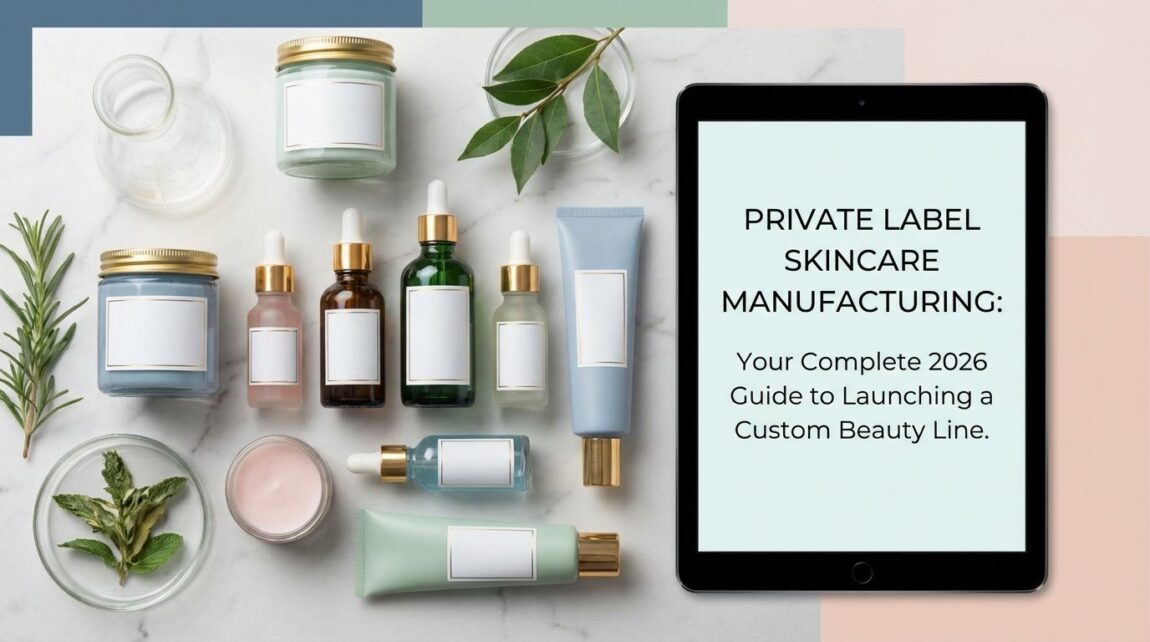
The global skincare market continues its explosive growth trajectory, with private label products capturing an increasingly significant share. For entrepreneurs and established brands alike, private label skincare manufacturing represents a strategic pathway to market entry without the substantial capital investment required for in-house production facilities. Understanding the nuances of this manufacturing model can mean the difference between a product that languishes on shelves and one that captures market share.
Understanding Private Label Skincare Manufacturing
Private label skincare manufacturing enables brands to sell professionally formulated, manufactured, and packaged products under their own brand name. Unlike white label production—where manufacturers create generic formulations that multiple brands can purchase and rebrand—private label cosmetics manufacturers work collaboratively with clients to develop unique products tailored to specific brand visions and target demographics.
This distinction matters significantly in today’s competitive beauty landscape. Consumers have become increasingly sophisticated, demanding products that deliver genuine innovation rather than repackaged commodity formulations. Custom skincare formulation services allow brands to differentiate themselves through proprietary ingredient combinations, specific texture profiles, and targeted efficacy claims.
The Strategic Advantages of OEM Skincare Manufacturing
OEM skincare manufacturing partnerships deliver multiple competitive advantages that extend far beyond basic production capabilities. These benefits address critical business challenges that emerging and established beauty brands face in 2026’s regulatory and market environment.
Accelerated Time-to-Market
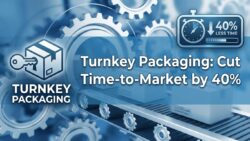
Developing in-house manufacturing capabilities requires substantial time investment—often 18 to 36 months from concept to first production run. Private label skincare manufacturing compresses this timeline dramatically. Experienced manufacturers maintain established relationships with ingredient suppliers, possess proven formulation libraries, and operate qualified production facilities under current Good Manufacturing Practice (cGMP) standards.
This infrastructure enables brands to move from concept to market-ready products in as little as 90 to 180 days, depending on formulation complexity and regulatory requirements. For brands seeking to capitalize on emerging trends or seasonal opportunities, this speed advantage can prove decisive.
Capital Efficiency and Risk Mitigation
Building FDA-compliant manufacturing facilities requires multi-million-dollar investments in equipment, cleanroom infrastructure, quality control laboratories, and regulatory documentation systems. For most brands, these capital expenditures create prohibitive barriers to entry while diverting resources from core competencies like marketing, brand development, and customer acquisition.
Partnership with a private label cosmetics manufacturer transforms these fixed costs into variable production expenses. Brands pay for actual production volumes rather than maintaining idle capacity during demand fluctuations. This financial flexibility proves especially valuable for testing new product concepts with limited initial production runs before committing to larger inventories.
Regulatory Compliance and Quality Assurance
Navigating the complex regulatory landscape governing cosmetics and over-the-counter skincare products demands specialized expertise. The FDA’s regulations under the Federal Food, Drug, and Cosmetic Act impose specific requirements for ingredient safety, labeling accuracy, manufacturing practices, and adverse event reporting.
Qualified private label manufacturers maintain comprehensive quality management systems that address these regulatory obligations. This includes ingredient verification protocols, microbiological testing, stability studies, and documentation practices that satisfy regulatory scrutiny. For brands without in-house regulatory affairs expertise, this knowledge transfer represents significant value beyond basic manufacturing services.
Key Considerations When Selecting a Private Label Partner
Not all private label skincare manufacturers offer equivalent capabilities or service levels. Evaluating potential manufacturing partners requires systematic assessment across multiple dimensions that directly impact product quality, regulatory compliance, and commercial success.
Manufacturing Capabilities and Specializations
Different manufacturers maintain distinct expertise in specific product categories and formulation types. Some excel in emulsion-based products like creams and lotions, while others specialize in anhydrous formulations, serums, or advanced delivery systems incorporating active ingredients at therapeutic concentrations.
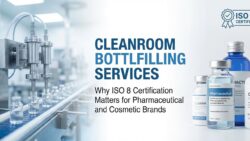
Cleanroom classification represents another critical capability distinction. Products requiring enhanced microbial control benefit from manufacturing in ISO Class 7 or ISO Class 8 environments. These controlled environments minimize contamination risks, extending product shelf life and reducing preservative requirements—increasingly important as consumers demand “clean beauty” formulations with minimal synthetic preservatives.
Minimum Order Quantities and Scalability
Minimum order quantity (MOQ) requirements vary dramatically across manufacturers, from as few as 500 units to 10,000 or more. While lower MOQs reduce initial capital requirements and inventory risk, they may indicate limited production efficiency or higher per-unit costs that compress profit margins.
Equally important is scalability potential. A manufacturer capable of producing your initial 1,000-unit run must also accommodate growth to 50,000 or 100,000 units as your brand gains traction. Switching manufacturers mid-growth creates formula transfer risks, potential quality variations, and supply chain disruptions that can damage hard-won brand reputation.
Custom Formulation Versus Formula Modification
Some manufacturers offering “custom” skincare formulation services actually provide limited modifications to existing base formulas—adjusting fragrance, color, or active ingredient concentrations within predetermined parameters. While this approach expedites development and reduces costs, it constrains differentiation potential.
True custom skincare formulation services involve collaborative development from concept through bench-scale testing, stability validation, and production scale-up. This process accommodates proprietary ingredient requests, specific sensory profiles, and performance characteristics aligned with brand positioning. The investment in genuine custom development pays dividends in market differentiation and sustainable competitive advantage.
The Complete Product Development Journey
Understanding the end-to-end development process enables realistic timeline expectations and productive collaboration with your manufacturing partner.
Concept Development and Formulation Design
Successful product development begins with clear definition of target consumer demographics, desired product positioning, price point constraints, and performance claims. This strategic foundation informs formulation decisions about ingredient selection, texture characteristics, and packaging format.
Experienced private label cosmetics manufacturers contribute valuable market intelligence during this phase, identifying ingredient trends, emerging active compounds, and formulation approaches gaining consumer traction. This collaborative approach often surfaces opportunities that brands working in isolation might overlook.
Prototype Development and Testing
Initial prototypes translate conceptual specifications into physical samples for evaluation. Multiple iteration cycles typically occur as brands assess texture, scent, efficacy, and overall sensory experience. Comprehensive testing protocols should include stability studies exposing prototypes to temperature cycling, light exposure, and extended storage to verify formula integrity throughout intended shelf life.
Microbial challenge testing—while not required for all cosmetic products—provides valuable quality assurance for formulations containing botanical extracts or minimal preservative systems. These tests verify that preservative systems effectively control bacterial and fungal contamination under simulated use conditions.
Regulatory Review and Label Development
Before production authorization, formulations undergo regulatory review to verify ingredient compliance, appropriate claim substantiation, and accurate label declarations. The FDA requires cosmetic labels to include ingredient lists in descending order of predominance, appropriate warning statements, and accurate net contents declarations.
Products making drug claims—such as sunscreens, anti-acne treatments, or anti-aging formulations with specific performance promises—face more stringent requirements as over-the-counter drugs. These products must follow established monographs or seek new drug approval, significantly impacting development timelines and costs.
Production and Packaging
Commercial production transforms approved formulations into finished, market-ready products. Modern white label skincare production incorporates automated filling systems, integrated quality control checkpoints, and comprehensive batch documentation tracing every production step.
Packaging selection profoundly influences product perception, shelf life, and user experience. Beyond aesthetic considerations, packaging must provide appropriate barrier properties protecting formulations from oxygen, light, and moisture while maintaining compatibility with product ingredients. Airless dispensing systems, for example, extend shelf life for oxidation-sensitive formulations while reducing preservative requirements.
Emerging Trends Shaping Private Label Skincare
The skincare industry evolves rapidly, with consumer preferences and technological capabilities creating new opportunities for innovative brands partnering with forward-thinking manufacturers.
Sustainable and Clean Beauty Formulations
Consumer demand for environmentally responsible products continues accelerating. This encompasses sustainable ingredient sourcing, biodegradable formulations, reduced plastic packaging, and transparent supply chain practices. Manufacturers investing in these capabilities enable brand partners to meet consumer expectations while differentiating in crowded market segments.
Personalization and Customization
Advanced data analytics and flexible manufacturing systems enable unprecedented product personalization. Some OEM skincare manufacturing facilities now accommodate small-batch custom formulations tailored to individual customer profiles based on skin assessments, environmental factors, and personal preferences. While production costs remain elevated, decreasing minimums make personalized products increasingly accessible.
Biotechnology-Derived Actives
Fermentation technology, microbial synthesis, and bioengineered ingredients deliver performance benefits while addressing sustainability concerns associated with traditional extraction methods. Manufacturers with capabilities integrating these advanced actives position brand partners at the innovation forefront.
Frequently Asked Questions
What are typical costs for private label skincare manufacturing?
Costs vary widely based on formulation complexity, production volume, packaging selection, and customization level. Initial development fees typically range from $2,000 to $15,000, while per-unit costs decrease significantly with volume—from $8-15 per unit for small batches to $2-5 for larger production runs. Custom packaging, premium ingredients, and specialized testing increase costs accordingly.
How long does product development typically take?
Standard products using existing formulations with minor modifications can reach market in 90-120 days. Fully custom formulations requiring extensive testing, stability studies, and regulatory review typically require 4-6 months. Products making drug claims or incorporating novel ingredients may extend to 12 months or longer.
Can I trademark and patent private label products?
Brand names, logos, and product packaging designs qualify for trademark protection regardless of manufacturing source. Formulation patents prove more complex—if you’ve developed a truly novel formulation or ingredient combination, patent protection may be available, though most private label arrangements use established formulation approaches that don’t meet novelty requirements.
Partnering for Long-Term Success
The most successful private label relationships transcend transactional vendor arrangements, evolving into strategic partnerships where manufacturers invest in client success. Look for partners offering comprehensive support including formulation consultation, regulatory guidance, packaging design assistance, and supply chain optimization.
At LF of America, our 35+ years of contract manufacturing experience encompasses both pharmaceutical-grade and cosmetic production under stringent quality standards. Our ISO 8-certified cleanroom facilities and turnkey packaging solutions support brands from concept through commercial production, ensuring product integrity and regulatory compliance while accelerating time-to-market.
Whether you’re launching your first skincare line or expanding an established brand portfolio, the right manufacturing partner transforms vision into market-ready products that resonate with consumers and deliver sustained competitive advantage. Ready to explore how strategic private label partnership can accelerate your beauty brand? Contact our team to discuss your specific requirements and discover how our comprehensive capabilities support your growth objectives.