Launching a new liquid product into the market requires significant investment in formulation, branding, and marketing—but one of the most critical decisions often gets overlooked until late in the development cycle: how to efficiently fill and package small production runs. Whether you’re testing market response, meeting regulatory requirements for pilot batches, or launching a limited product line, small batch bottle filling provides the flexibility manufacturers need without the overhead of large-scale production commitments.
The challenge for emerging brands and established companies alike centers on finding contract bottle filling services that can handle low minimum order quantities while maintaining the same quality standards, regulatory compliance, and precision required for full-scale manufacturing. This is where specialized liquid filling services become invaluable to product development strategies.
Understanding Small Batch Bottle Filling Requirements
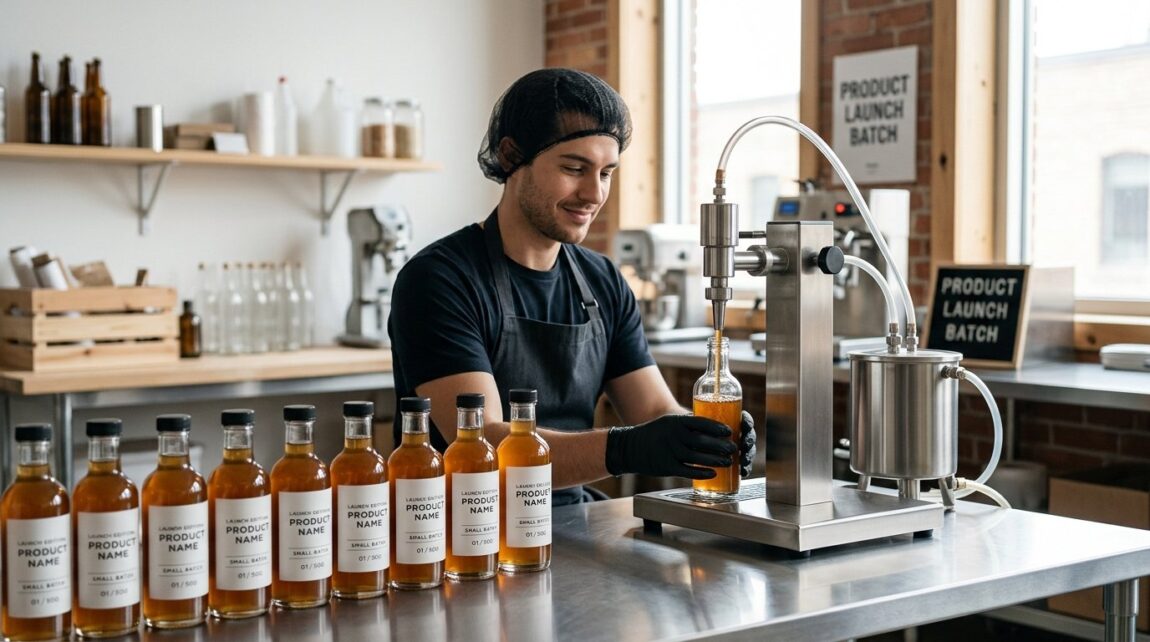
Small batch production typically refers to runs ranging from a few hundred units to several thousand bottles, depending on product type and market segment. Unlike mass production where economies of scale drive per-unit costs down, small batch bottle filling must balance flexibility with efficiency.
For pharmaceutical bottle filling applications, even small batches demand stringent cleanroom environments. FDA regulations don’t distinguish between batch sizes when it comes to current Good Manufacturing Practices (cGMP) compliance. A 500-unit run of an over-the-counter liquid medication requires the same environmental controls, documentation, and quality assurance protocols as a 50,000-unit production run.
Similarly, cosmetic bottle filling for premium beauty products increasingly demands pharmaceutical-grade cleanliness. Today’s informed consumers expect products free from contamination, with consistent fill volumes and proper sealing that ensures product integrity from manufacturing through end use.
The Strategic Value of Small Batch Manufacturing
Market Testing Without Massive Capital Investment
One of the most compelling reasons brands choose small batch production involves market validation. Launching a full product line without market feedback represents substantial financial risk. Small production runs allow companies to test consumer response, refine formulations based on real-world feedback, and adjust packaging before committing to large inventory positions.
A skincare startup, for example, might develop three serum variants targeting different skin concerns. Rather than producing 10,000 units of each formulation, contract manufacturing partners offering custom bottle filling can produce 1,000 units per variant. This approach enables the brand to identify best sellers, gather customer feedback on packaging preferences, and optimize the product mix before scaling production.
Regulatory Compliance and Stability Testing
Pharmaceutical and OTC product development involves extensive stability testing to determine shelf life and storage requirements. These studies require product packaged in its final commercial container closure system. Small batch pharmaceutical bottle filling enables manufacturers to produce the quantities needed for stability protocols without overproducing product that may require formulation adjustments based on test results.
FDA guidelines require stability data generated from product stored in the same container that will be marketed. This means if your commercial product will be in a 30ml amber glass bottle with a specific closure system, your stability samples must be identical. Contract bottle filling services specializing in small batches can accommodate these testing requirements efficiently.
Seasonal and Limited Edition Products
Many cosmetic and personal care brands thrive on limited edition releases and seasonal product variations. These specialty items generate excitement and urgency among consumers but don’t justify the investment in large production runs. Flexible liquid filling services allow brands to capitalize on trends, holidays, and seasonal demands without excess inventory risk.
Technical Considerations in Small Batch Bottle Filling
Equipment Versatility and Changeover Efficiency
The economics of small batch production depend heavily on equipment flexibility. Traditional high-speed filling lines designed for single products running continuously become cost-prohibitive when frequent changeovers are necessary. Advanced contract manufacturing facilities invest in equipment that can accommodate multiple bottle sizes, various fill volumes, and different product viscosities with minimal downtime between runs.
Modern filling technology includes programmable logic controllers (PLCs) that store recipes for different products, enabling rapid setup changes. For brands utilizing contract bottle filling services, this means your 2-ounce cosmetic serum and 4-ounce body oil can be filled on the same equipment with quick transitions, reducing your per-unit costs despite smaller batch sizes.
Cleanroom Standards for Liquid Products
Cleanroom bottle filling isn’t just for pharmaceuticals anymore. As consumers become more ingredient-conscious and demand preservative-free formulations, cosmetic manufacturers increasingly require controlled environments to prevent microbial contamination.
ISO Class 8 cleanrooms provide the environmental controls necessary for most liquid filling applications, including pharmaceutical, cosmetic, and personal care products. These controlled environments maintain specific particulate counts, temperature, and humidity levels while following strict gowning and sanitation protocols.
For small batch production, cleanroom access becomes particularly valuable. Emerging brands often lack the capital to build their own certified facilities, making partnerships with experienced contract manufacturing providers essential. The ability to produce small quantities in a validated cleanroom environment gives smaller brands the same quality advantages as major corporations.
Fill Volume Accuracy and Quality Control
Regardless of batch size, fill volume accuracy remains critical for regulatory compliance, cost control, and consumer satisfaction. Overfilling increases material costs and may cause leakage issues, while underfilling violates labeling regulations and disappoints customers.
Professional liquid filling services employ various technologies depending on product characteristics. Volumetric filling works well for low-viscosity products like toners and liquid supplements. Peristaltic pumps handle more viscous formulations such as lotions and serums. Net weight filling systems provide the highest accuracy for products sold by weight.
Quality control in small batch production includes in-process checks of fill weights, visual inspections for defects, and documentation of critical control points. Even with smaller runs, statistically valid sampling ensures each bottle meets specifications.
Container Options and Custom Bottle Filling Solutions
Small batch production doesn’t mean limited packaging choices. Contract manufacturers with established supplier relationships can source a wide range of stock bottles in small quantities, from amber glass pharmaceutical bottles to specialty cosmetic packaging.
Custom bottle filling capabilities extend beyond standard containers. Many brands differentiate themselves through unique packaging that reflects their brand identity. While custom molds typically require large minimum orders, modified stock bottles—featuring custom labels, specialized caps, or unique decorative elements—offer brand distinction at small batch volumes.
Material selection significantly impacts product stability and shelf life. Glass provides excellent barrier properties for products sensitive to oxygen or light. High-density polyethylene (HDPE) offers durability and chemical resistance for many cosmetic and personal care applications. PET plastic combines clarity with lightweight properties ideal for certain product categories.
The Turnkey Advantage in Small Batch Production
Managing multiple vendors for formulation, filling, labeling, and secondary packaging creates logistical complexity that diverts focus from core business activities. Turnkey contract manufacturing consolidates these services under one roof, streamlining project management and reducing time-to-market.
For small batch bottle filling projects, turnkey capabilities become especially valuable. A single partner can coordinate all aspects of production, from receiving bulk product through final packaged goods ready for distribution. This integration reduces handling steps, minimizes contamination risks, and simplifies quality assurance documentation.
Comprehensive services typically include primary packaging (bottle filling and capping), labeling with lot coding and expiration dating, secondary packaging such as boxing and shrink wrapping, and warehousing with fulfillment capabilities. This end-to-end approach proves particularly beneficial for brands testing new markets or managing multiple SKUs.
Cost Considerations and Scalability
While per-unit costs for small batches exceed those of large production runs, smart manufacturers focus on total program costs rather than unit price alone. Small batch production eliminates warehousing expenses for large inventories, reduces obsolescence risk from formulation changes or packaging updates, and improves cash flow by aligning production with actual demand.
The scalability factor matters significantly when selecting contract bottle filling services. As products gain market traction, production volumes grow. Partnerships with manufacturers capable of handling both small batch and large-scale production provide continuity as brands expand. Process validation, quality documentation, and production procedures remain consistent as volumes increase, avoiding the disruption of changing manufacturing partners.
Selecting the Right Small Batch Manufacturing Partner
Not all contract manufacturers accommodate small batch production effectively. When evaluating potential partners, consider these critical factors:
- Minimum order quantities: Ensure the manufacturer’s minimums align with your volume needs and business model
- Regulatory credentials: Verify appropriate certifications including FDA registration, cGMP compliance, and relevant ISO standards
- Technical capabilities: Confirm equipment can handle your specific product characteristics, viscosity, and container requirements
- Quality systems: Review quality control protocols, testing capabilities, and documentation practices
- Flexibility: Assess willingness to accommodate custom requirements, rush orders, and product development support
- Scalability: Ensure capacity to grow with your brand as production volumes increase
- Communication: Evaluate responsiveness, project management capabilities, and technical support availability
Accelerating Time-to-Market Through Partnership
In competitive markets, speed often determines success. Brands that reach consumers first establish market position and brand recognition advantages. Small batch bottle filling through experienced contract manufacturing partners significantly reduces time-to-market compared to building internal production capabilities.
Established manufacturers bring validated processes, trained personnel, and existing regulatory documentation that would take months or years to develop independently. This infrastructure allows new products to move from formulation to finished goods in weeks rather than months.
Partner With Proven Small Batch Bottle Filling Experts
LF of America brings over 35 years of specialized experience in contract bottle filling services for pharmaceutical, cosmetic, and personal care products. Our ISO 8 cleanroom facilities accommodate small batch production with the same rigorous quality standards applied to large-scale manufacturing. From initial product development support through market launch and scaling, we provide flexible, turnkey solutions that help brands succeed.
Whether you’re launching your first product or expanding an established line, our custom bottle filling capabilities, regulatory expertise, and commitment to quality ensure your products reach market with confidence. Contact us to discuss how our small batch manufacturing solutions can support your product launch strategy.